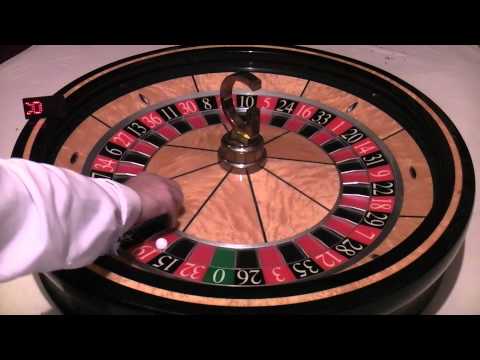
I have spent years watching casino promotions come and go, and no format creates as much head-scratching as the tournament. The pitch appears straightforward: go up against other players, climb a leaderboard, grab a prize. What you truly experience is more complicated. In France, where gambling advertising confronts strict rules and the Autorité Nationale des Jeux keeps operators on a short leash, tournaments have established themselves as a standard feature on platforms like corgibetcasino. They appear on slots, blackjack, even live dealer tables. My goal here is to put the marketing copy aside and look at how these events operate, what the fine print obscures, and which questions you should raise before you click that opt-in button. This is not a pitch. It is a straightforward walkthrough of a promotion type that gets misunderstood, sometimes on purpose, by an industry that counts on your optimism.
Eight. Withdrawal Rules on Tournament Winnings
Payout money from tournaments is hardly ever cashable on the spot. In the French regulated market, operators must perform anti-money-laundering checks on any payout, but tournament winnings often come with extra wagering requirements. A common setup I come across is a 1x to 5x wagering requirement on the prize amount before withdrawal is granted. If you win €200 and the requirement is 3x, you must play through €600 on eligible games before you can withdraw. During that playthrough, the house edge steadily reduces the anticipated value of your prize shrinks. Some tournaments advertise “no wagering” prizes as a attraction, and those are truly worth more. Corgibet Casino from time to time organizes such events, and the terms are explicitly marked on the promotion page.
There is also a time limit to consider. Wagering requirements have an expiry window, usually between 7 and 30 days. If you do not finish the playthrough in time, the bonus funds and any linked winnings disappear. I have seen players win a tournament, forget about the prize, and lose the whole thing because they did not log in within the window. The notification arrangement changes by operator. Some send emails, others rely on in-app alerts. In France, where marketing emails are opt-in by default, you might not get a reminder if you refused promotional messages. My practical tip: schedule a calendar reminder the moment your name lands on the final leaderboard.

3. Game Qualification and the Snare of Restricted Titles
Every tournament works from a whitelist of qualifying titles, and this is where I see letdown hit most often. A player joins, spins their preferred slot for an hour, and then discovers none of those spins applied toward the leaderboard. The qualifying list usually sits in a dropdown or on a separate promotional page, and it is likely to be smaller than the marketing banner implies. Sometimes only one software provider’s portfolio counts. This is no mistake. Operators negotiate with game studios to channel attention to particular slots, and the tournament format serves as a strong lever. When Corgibet Casino runs a tournament, the permitted slots get marked in the lobby, but you still need to check because the tagging system sometimes falls behind behind the promotion start time.
The restriction pulls double duty. It focuses liquidity so the leaderboard becomes populated fast, generating social proof and urgency. It also stops players from moving toward the highest-RTP games that would provide them with an edge. If a tournament counts on total wagered, a 98% RTP slot lets you cycle funds longer than a 94% one. By confining the pool to lower-RTP or average-risk titles, the operator guards its margin while still offering a prize incentive. I suggest scanning the eligible list for the game with the highest return-to-player percentage and the volatility profile that matches the scoring system. This is not some hidden tactic. It is basic preparation that most competitors ignore entirely.
2. The Scoring Methods Nobody Explains
I cannot overstate how much the scoring formula influences your experience. The most transparent tournaments use a points-per-wager system where every €1 bet gives one point, win or lose. This setup benefits volume and bankroll size. A player with deeper pockets can simply accumulate more points, which shifts these events away from skill and toward endurance and capital. Other tournaments use net win, where only profits count. That creates a high-variance dynamic. A single big bonus round on a volatile slot can send a low-volume player straight to the top. I have seen leaderboards where the top ten spots all were held by players who got one wild spin early and then stopped playing cold.
Some operators, Corgibet Casino included, occasionally roll out hybrid tournaments that blend multiple metrics. You might get points for every winning round and bonus points for hitting a multiplier above 50x. The complexity here is deliberate. When the scoring remains unclear, players cannot easily figure out if their approach makes sense. My advice: check the tournament terms before you start and review the scoring clause until it makes sense. If the rules say only real-money spins count and bonus funds are excluded, account for that. If the scoring uses a logarithmic scale to reduce extreme results, a steady strategy might be better than a high-risk one. The hard truth is that most participants never look at these details, and sharp players quietly capitalize on that ignorance.
6. How Casino Tournaments Differ from Poker Tournaments
I have to confront this head-on because the word “tournament” brings in poker associations that does not belong here. In a poker tournament, your decisions directly affect your chip stack, and skill drives the long-term results. In a casino tournament, the house edge eats away at every bet, and the main skills are game selection and bankroll management inside the rulebook. You cannot bluff a slot machine. You can’t fold a bad blackjack hand to preserve your score. Your agency is more limited, and luck plays a much bigger role in any single event. Over many tournaments, a disciplined player who knows scoring systems and eligible games will defeat a casual one, but the variance is high enough that a beginner can win on any given day.
Another big difference is the lack of direct elimination. In poker, you are done when your chips disappear. In most casino tournaments, you can keep playing as long as the clock ticks and you have funds. This reverses the risk calculation entirely. A poker player confronting elimination makes desperate moves. A casino tournament player can always re-enter or just settle for a lower rank and walk away. The missing of a bust-out moment makes it harder to leave the seat, which is exactly why the format is designed. Platforms like Corgibet Casino design these events to keep you playing, not to honor the most skilled gambler. Accepting that truth makes you a more clear-sighted participant.
5th Leaderboard Mental Game and Late Sign-Up
The leaderboard is a behavioral tool as much as an informational one. When you see your name in 47th place and the top 20 get paid, the urge to play just a little more hits hard. Operators tune the update frequency to leverage this. A real-time leaderboard amplifies the sense of urgency. A delayed one builds suspense and pushes you toward over-wagering because you cannot know exactly where you stand. I have observed that tournaments with late registration, where you can join after the start time, often attract a flood of entries in the final hour. These late arrivals are aware of the score to beat and can size their spend accordingly. That is a sensible move, but it takes self-control to sit back while the early field consumes its bankroll.
Prize distribution shapes behavior too. A winner-takes-all format drives extreme risk-taking because only the top spot pays. A flat payout structure that rewards the top 50 players with small amounts fosters grinding sheer volume. The tournaments I find most psychologically dangerous are those with a steep but not sheer prize curve, where the gap between 5th and 6th place bites. That gap establishes a bubble dynamic. Multiple players compete over a cutoff, each one accumulating more spend to avoid falling just short. If you enter a tournament, set your loss limit before you start and consider that number as a hard wall, no matter where you sit on the leaderboard with ten minutes left.

9. What to Check Before You Enter Any Tournament
I have developed a individual checklist across years of participating in and analyzing these events, and I will share it here without filler. The first item is the scoring formula, which I already discussed in detail. The second is the prize distribution table: understand precisely how many places pay and what the minimum cash prize is. Thirdly is the game eligibility list, including any excluded features like bonus buys, which often get disabled during tournaments because they would warp the scoring. Fourthly is the entry mechanism. Some tournaments demand an opt-in click. Others auto-enroll you the moment you play an eligible game. Auto opt-in sounds handy, but it can drag you into accidental participation and wagering you never meant to do.
The 5th item is the network status of the tournament. Many events are not locked to one casino but distributed across multiple white-label sites sharing the same platform provider. A leaderboard featuring 500 players might gather from a dozen different brands, which means the competition is more intense than it looks. Corgibet Casino’s terms clarify whether a tournament is site-specific or network-wide, and I always review that disclosure. Finally, verify the support channel for disputes. If your score does not update properly, you need a clear route to a fix. In the French market, the médiateur de la consommation is the final escalation point, but the operator’s own support team should be your first stop. Save your final leaderboard position as a backup. These steps need two minutes and can prevent hours of aggravation.
Common Questions Players Have
- Can I use bonus funds to participate in a tournament? Typically no. Most tournaments require real-money wagers, and bonus balance spins fail to earn points. Check the specific terms, as some reload tournaments permit bonus play but at a diminished points rate.
- What takes place if two players tie on the leaderboard? The standard rule awards the higher prize to the player who reached the score first. Time-stamping is automatic, so the early achiever gets the edge. Some tournaments share the combined prizes, but this is rarer.
- Are live dealer table games ever included in tournaments? Indeed, but less often. Live casino tournaments typically use a separate scoring system based on net win over a session, and the eligible tables remain limited to specific providers like Evolution or Pragmatic Play Live.
- Do I pay taxes on tournament winnings in France? Gambling winnings from ANJ-licensed operators are generally exempt from income tax for recreational players. Professional gamblers encounter different rules, but the threshold for professional status is elevated and fact-specific.
7. Tech Specs and Mobile Play
Tournament play needs a stable connection because leaderboard data and score tracking rely on server-side chatter. A disconnected session during a spin does not normally cancel the spin, the result is locked in the moment you click, but it can slow down your score update and stir up anxiety. I have tested tournament play on mobile devices plenty, and the experience on Corgibet Casino’s platform works smoothly across iOS and Android, with the leaderboard available through a collapsible in-game overlay. The main risk on mobile is inadvertently closing a tab mid-session, which can log you out and force re-authentication. If you are playing a timed tournament, include that two-factor authentication step, especially under French regulations where session timeouts are required for responsible gambling compliance.
Browser choice matters less than device memory. Slots with heavy animations can crawl on older phones, and a laggy interface might make you spin slower than desktop competitors. In a volume-based tournament where speed counts, that is a real disadvantage. I advise testing the eligible games on your intended device before the tournament starts. Check the load times, the spin resolution speed, and whether the game includes a turbo or fast-play mode. Some providers turn off fast-play during tournaments to level the field, but many do not. A few seconds earned per spin adds up over a two-hour event into dozens of extra scoring chances.
4. The Real Cost of Entry and Rebuys
Free-to-enter tournaments are not free. They demand you wager real money on eligible games, and the expected loss from that wagering is your implicit entry cost. If a tournament demands a minimum of €500 in spins to stay competitive and the average RTP of eligible games sits at 96%, your expected loss runs roughly €20. That is your entry fee, even when no upfront fee appears on the screen. Buy-in tournaments make this cost visible. You pay, say, €10 to enter, and that fee flows into the prize pool minus an operator commission that can run from 10% to 20%. In the French market, the commission must be disclosed, but the presentation can still muddy the waters. I have seen terms where the entry fee splits into a prize contribution and an “processing fee,” and only the former gets waved around in the guaranteed prize pool figure.
Rebuys complicate the calculation. Many tournaments let you pay extra fees to reset your score or keep playing after you bust out. In a net-win format, a rebuy hands you a fresh starting balance, which can help if your first session went south. But each rebuy carries the same house-edge erosion as the initial entry. A player who rebuys five times in a €10 tournament has sunk €50 into a shot at a prize pool that may not justify the outlay. I track my tournament spending separately from regular play for exactly this reason. The costs stack up quietly. The leaderboard shows only scores, not how much each player paid to get there. That information gap works in the operator’s favor, and in favor of the deepest pockets.
Number 1: The Way a Casino Tournament Truly Functions
Strip it down and a casino tournament is a scheduled competition where players build points based on their wagering. Unlike a poker tournament where you sit at a table and your choices influence someone else’s outcome, most casino tournaments are parallel play events. You activate a slot or place a blackjack bet, and a formula transforms your action into a score. The operator then ranks everyone on a leaderboard that updates in real time or at set intervals. The scoring mechanism is the part that matters most. Some tournaments lean on a simple win-to-wager ratio, so a €1 bet that pays €50 spits out a high multiplier score. Others track gross wins, total volume wagered, or even the number of consecutive winning rounds. I have seen events where the metric was the highest single-spin multiplier, and that one detail turns the whole strategy on its head.
The prize pools are diverse. Some are fixed amounts the operator guarantees, while others increase with the number of participants or the total buy-in collected. In France, free-to-enter tournaments are common as retention tools, but buy-in events exist too, where the entry fee goes directly into the prize fund. The duration can be a two-hour sprint or a month-long grind. What you need to grasp is that the tournament is not about beating the house. It is about beating other players under a specific rulebook. The house edge still takes effect on every wager you make. The tournament overlay, the prize money itself, is what shifts the expected value, and only if you play efficiently compared to the rest of the field.